
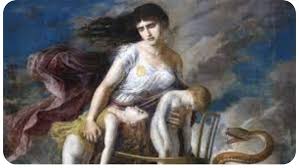
In the example we present, we will follow the steps of the methodology proposed by the HEDA project in order to make easier to understand: the method, the original approach and the importance of its adoption and its application by teachers in class. We use as an example the topic of immigration-refugee crisis. We use the same topic in the following case study, which has as its starting point a painting (a visual prompt) as a starting motivation point.
STEP 1 – Immigration-The refugee crises (the immigrant the foreigner)
The teacher is going to deal/discuss/teach the topic of immigration/refugee crisis in class.
CITIZEN’S BEHAVIOUR APPROACH
General definition-1st phase of the approach (preparation before the lesson)
Topics of diversity, racism and fascist behaviors have emerged in recent years with the rise of the immigration and refugee crisis more or less all over Europe. The European citizen has felt that some things taken for granted and acquired for decades are in danger of being lost. The crisis roughly appeared in two phases:
a. with the fall of the regimes of existing socialism and
b. with the current situation and the wars in the Middle East (Syria, Palestine, Afghanistan) and Africa.
In Europe, citizens without any prior background of racist characteristics in their behavior, under the spectrum of fear, are very suspicious of the “foreigners” who arrived in the cities, in the neighborhoods and outside their homes and not only distanced themselves but acquired racist attitudes, attitudes of hatred belonging to fascist mentalities and ideologies.
In the countries of the south the problem was and is huge with the masses of desperate refugees entering Greece and Italy illegally from Turkey and North Africa. In Central and Northern Europe, the phenomenon appears to milder and the problems are smaller.
2nd phase of the approach
The teacher approaches (prepares) the topic in detail
-What is included in the official teaching material?
-What happens in the Western world and what happens in the Eastern world with the different religious prejudices, different attitudes, cultural and moral traditions?
-Are there different characteristics between the social classes?
-What happens in the teacher’s country?
-What is happening in his/her region? (in the classroom, students and parents attitudes, etc.).
STEP 2: Finding the artwork (theatre, painting, scene from a video, etc)
In a course of social and civic education (Citizenship education) according to the methodology proposed by the HEDA project:
1. It could be possible to use (among many others) the case of Mideia (from Euripides’ tragedy Mideia) who, being a “foreigner” herself as she is of royal descent from Colchis, comes to Greece driven by her love for Jason. After years and after having 2 children, Jason drives her away and she finds herself a fugitive and homeless for the second time.
2. The teacher could take the introduction and prologue from a painting. Following a discussion and after the students express themselves, the teacher could then move on to the extract from the play text. In the case of MIDEIA there are too many paintings portraying the tragic heroine. (see the well-known painting of Frederick Sandys).
STEP 3: Design of the artistic material
The teacher chooses (in our example) a passage from the scene where Aegeus, king of Athens, appears and talks to Mideia and promises her a home after Creon and Jason drive her away from Corinth. In the passage we use as a model and example of our methodology, cuts and changes have been made as indicated in step 3. Also, lines were given to the chorus to ensure participation by more students in the class. Actions of adaptation that the teacher teaching the lesson mentioned above can also take that are perfectly legal and legitimate.
The points of discussion are many and depend on: the lesson and in what topics the teacher wants to focus, where the teacher gives more emphasis, etc.
STEP 4 – Points of interest & discussion in class (step 5)
The teacher asks specific questions and provides the students with discussion points as he/she will raise them in the classroom in order to gather opinions and views from the students and discuss them in the context of the lesson.
The points of interest and discussion are listed in the second column of the text. These points, without them being at random, can be different, more or less depending on the lesson and the format the teacher wants to give. It is obvious that on such an intense and sensitive subject, the lesson taught by a teacher in a Central or Northern European country will be different from a lesson taught in a school in the European South.
STEP 5 – In class
The Teacher gives an introduction to the topic that will be discussed in class:
What should be our attitude towards people, desperate people who are forced by: various political circumstances, war and turmoil to leave their homeland and their homes and come to our country, claiming a new life away from life threatening situations.
®Do they have rights?
®If so, what are they?
®What do official records, treaties state and what is our personal attitude and behavior towards them?
STEP 6 – Artistic activity
The teacher distributes to the students the selected passage (from Mideia in our example)
®Makes an introduction and describes in a few words what it is about
®Which passage-scene he/she has chosen and where it is taken from
®What is the plot of the play, the myth, the characters, the relationships and the conflicts.
So that the students can understand and place the passage in a fictional context and relate it to the topic chosen which include Immigration, Refugee, crisis, the attitude of the immigrant and the treatment of the stranger.
STEP 7 –Scene, let’s play (1st approach to the text, analysis)
It then enters a theatrical process (role-playing).
There is a first reading of the passage, first by the teacher (for the reasons mentioned earlier) and then a first discussion on the play, the action, the plot, the characters and what they are trying to achieve, what the poet wants to tell us and the meanings that come out of the action, their relationships and conflicts. How does the poet in a symbolic way and using myths from mythology, adapting them as he sees fit, wants to address issues of his time. The teacher does the same for the purposes of the lesson.
STEP 8 – “Rehearsal” procedure
Then the teacher distributes the roles. The distribution of the roles is done from a pedagogical rather than a theatrical point of view1 and as a “director” the teacher makes some remarks, corrections for the better understanding of the meanings in relation to the lesson and not for better aesthetically wise performances or interpretations on the part of the students. The passage is therefore short (4 minutes reading ). Words have also been added to the chorus to actively engage as many students as possible to ensure the class as a whole (15 students) is engaged in the class activities.2
1. The teacher can assign the roles according to the criteria resulting from the composition of the class. For example, he/she may give a role to a student with an introverted behavior to help him /her socialize and communicate with others , to a student that has expressed himself/herself against immigrants and refugees, rather than to someone who will play the role better.
2. Alternative-experiential teaching methods have implications beyond the understanding of the lesson and the subject matter in question. Through the arts, students are introduced to artistic issues, practice and discover their aptitudes, socialize and work cooperatively as a group.
THE QUOTATION from Euripides’ tragedy Mideia
(We list in the first column the dialogue and in the second column the comments on the issues to be discussed. The numbering indicates the points where the teacher will interrupt and discuss ( a feature of the FORUM theater)
| AEGEAS: Greetings, Mideia. It’s good to see you. MIDEIA: Hail to you too, Aegeus. How did you come to our land? Where do you come from? AEGEAS: I come from the sacred oracle temple of Delphi. MIDEIA: Why did you go to the navel of earth? AEGEAS: I wanted to know how I too could have children and offspring. MIDEIA: For the gods’ sake, have you spent your life so far without children? CHORUS: Fate and the gods determine the fate of mortals. AEGEAS: Indeed. So ordained by fate and the gods. But why did thy look and thy countenance reign? What makes you so unhappy? MIDEIA: I am wronged by Creon the king, and my husband Jason agrees, while I have never wronged him. AEGEAS: Doing what? Speak out. MIDEIA: He is driving me into exile, forcing me out, away from Corinth. CHORUS: There is no worse harm for the citizen. CHORUS: From home, from ones country to be exiled. AEGEAS: Oh, great bad found thee poor unfortunate. AEGEAS: No grater one exists. MIDEIA: Take pity on me in my misfortune. Don’t let me be exiled without a friend. Accept me as a suppliant in your home, your native land. If you will take me in, may the gods then answer your desire to have children. May you die a happy man. You don’t know what a lucky one you are to find me here. I’ll end your childlessness. I know the sorts of medicines to use, and I can help you have many children. AEGEAS: Lady, I’d like to grant this favour to you, for many reasons. First, there’s the gods, Then, for the children you say I’ll produce. CHORUS: It is only fair that when you benefit someone, you are benefited. AEGEAS: Here’s what I’ll do. If you get to my country, I’ll strive to treat you as a foreign guest— that’s the proper thing for me to do. But, Medea, I’ll give you fair warning: I won’t plot to get you out of Corinth. If you can reach my household on your own, you may stay there in safety. Rest assured— I won’t surrender you to anyone. But you must make your own escape from here. CHORUS: But why have you made such a decision? CHORUS: Really, I do not understand what you are saying. CHORUS: What will you gain from this? CHORUS: Explain yourself clearly! AEGEAS: I don’t want my friends finding fault with me and blaming me that I took you. CHORUS: Now I understand what exactly your words mean. MIDEIA: That’s fine with me. If you could promise this, you’ll have done me all the good you can. AEGEAS: I swear and by the gods I promise that you will find refuge in my house and I will protect you. Don’t you trust me? MIDEIA: I do trust you· But the house of Pelias dislikes me, and so does Creon’s, too. If you bind yourself to a promise now, you’ll not hand me over when they come, seeking to remove me from your country. CHORUS: The oath is respected. CHORUS: The gods protect it and the mortals respect it. MIDEIA: If you use words, and don’t swear by the gods, you may become their friend and then comply with their political demands CHORUS: Words are like birds, they fly and flee in an instant. CHORUS: The interests and policies can change. MIDEIA: You may comply with their political demands. I have no power, whereas they do. AEGEAS: What you’ve just said is very shrewd. All right, if it’s what you want, I’m not unwilling to do what you require. Your proposal gives me some security. I can show those hostile to you I’ve a good excuse. And it makes your position more secure. Tell me the gods that I should swear by. MIDEIA: Swear by the plain of Earth, by Helios, my father’s father, by the family of gods, by all of them collectively AEGEAS: Tell me what I must swear to do and not to do. MIDEIA: Never to cast me out from your own country because I’m a foreigner, with no country and no religion. And if some enemy of mine asks you if he can take me off, you’ll not agree, not while you’re still alive. AEGEAS: To that I swear. By the Earth, by Helios’ sacred light, by all the gods, I’ll do what I’ve just heard. MIDEIA: That’s good. And if you betray this promise, what happens to you then? AEGEAS: May I then suffer the punishment that falls on profane men. MIDEIA: All is well. Now, go your way in peace. I’ll come to your city as quickly as I can, once I’ve completed what I mean to do, and my plans here have been successful. | POSSIBLE DISCUSSION TOPICS: The theatrical text/excerpt inevitably functions symbolically almost always. The persons and situations are random and meaningful. So the teacher must point out their interpretations and meanings. Μideia = a refugee ΑAegeas = an official representative of the host country Kreon & Iason= it is the state/government that forces the immigrant/refugee to leave the country and his/her home. Oaths = are the written laws and institutions that uphold justice and guarantee the observance of agreements QUESTIONS-DISCUSSION TOPICS What are the reasons that people massively leave their country? Α. Immigration Β. Refugee shelter What’s the difference between the 2? Who is a refuge, who is an immigrant? What’s their difference? (1951 Geneva Convention and relevant international organisations – see https://rm.coe.int/-2-/168075b8b2). The refugee or the immigrant is a fugitive, a contemporary supplicant. QUESTIONS-DISCUSSION TOPICS What are his/her needs? What does he/she want? What does he/she hope for? Coming to a foreign country, he/she hopes and asks for asylum, for: a better life, shelter, food, & education for his children. Aegeas calls upon the gods. QUESTIONS-DISCUSSION TOPICS Is religion the reason why someone becomes a refugee? Does religion protect you in your country of origin? Does it protect you in the host country? What differences and conflicts arise from different religions when traditions and cultures come together? Mideia, the foreigner wants guarantees for the quality of his/her life. QUESTIONS-DISCUSSION TOPICS Will it be safe in the host country? Will he or she be protected by the laws as all citizens are? Will he/she have the same rights? Is it right that he/she should have the same rights and be respected as a human being, or will he be a second-class citizen? QUESTIONS-DISCUSSION TOPICS Mideia talks about politics. And politics/policies change as politicians change. Aegeus as an individual (like any representative of power) may have the best intentions, but as a head of state, as a politician, he is subject to pressures and operates under the rule of other circumstances and conditions. So are promises, agreements and treaties respected or revised at the slightest change of situations, political interests, and political forces? Mideia, the refugee, does not want to be the center & focal point of every political game, she does not want to be exploited and at her expense to be the subject of negotiations and political bargaining. (See the refugee crisis and Erdogan). Mideia calls upon values, laws and traditions that are respected by all, apart from political beliefs that change. The issue of racism and diversity. QUESTIONS-DISCUSSION TOPICS There are indeed many religions, cultures and colors in people. There are differences in gender, sexual orientation, economic status, education and much more. Should our behaviour and attitude towards the other person change according to their colour, according to their gender, according to their sexual orientation, whether they are rich or poor, whether their clothing preferences are in line with ours? Mideia asks for protection and asylum. QUESTIONS-DISCUSSION TOPICS Do we have a duty to provide protection, asylum to the oppressed, to the refugee who comes to our country? Beyond the laws, what do our humanitarian values and our culture dictate? QUESTIONS-DISCUSSION TOPICS Is there a punishment for anyone who violates oaths and breaks promises? Is there a punishment for anyone who breaks oaths and promises to the stranger? Should there be or should there not? Are we equal in the face of the law? |
STEP 9
he teacher lets the children read and become familiar with the text and the dialogue. After this has been done a few times and the elementary observations have been made so that the meanings come out (intonations, breaths, possible pauses, questions, answers) and the characters are having a normal flow conversation, the teacher, acting as a mediator, starts the conversation.
He interrupts and asks the questions (right column in the text) as indicated during preparation (STEP 4). This is done in parallel with the action. That is, at the selected points the teacher stops the action and invites comments and discussion by asking questions first in relation to the passage (Medea, Aegeus, Chorus, what they say, what they argue about, are they right, do they evoke feelings of sympathy, antipathy, etc.) Also makes the implications for present-day life and reality. It is important for students to express their opinions and views and the discussion that results from this.
STEP10
From the theatrical activity (passage from Mideia in our case) different, opposite, perhaps conflicting positions/views/aspirations have emerged from the students:
- IN RELATION TO THE ACT AND THE CHARACTERS
a. Is Mideia right in wanting to leave or should she stay and stand her ground since because of the marriage and the family she has created with Jason this is also her country?
b. Is Aegeas doing the right thing by accepting her in his own country or should he not jeopardize the political friendship between the two states of Athens and Corinth?
2. IMPLICATIONS – IN RELATION TO THE CURRENT REALITY
c. There are issues of political dictates on one hand and humanism and human cultural values on the other hand. Which of the two prevails and why?
d. Should humanitarian values prevail over political purposes or vice versa?
e. What is the role of the state and what is the role of citizens? If the state has a policy hostile to immigrants through laws and decrees, should citizens as human beings follow them or show their humanitarianism & solidarity, and provide assistance to immigrants/refugees against the dictates of the state?
DIVISION INTO GROUPS SUPPORTING DIFFERENT POINT OF VIEWS
In this phase of the lesson, the teacher divides the students into support groups with clear objectives: each group should build an argument, defending its point of view.
Each group is then charged with supporting and consolidating its views by collecting/compiling arguments (supported by relevant research on the internet or elsewhere, within the course or as an activity beyond the course, interviewing experts, etc.) and defending its point of view as best as possible. The conflict (of arguments) should be strong and interesting and in the end the correct viewpoint should prevail in the consciousness of the (micro) society of the class. (By “correct” we mean that the aim is to promote views based on civilized, humanitarian, democratic principles ideals and values).
Debates are thus organised with the different sides supporting their point of view with arguments beyond what is present, apparent or implied in the text and in the theatrical action.
After the lesson – Outside the classroom. Interventions in the social domain
The task and reflection can be continued after the main lesson, by having the teacher give the students projects that can be a desk research or interviews with people who are considered experts in the subject matter under consideration.
In the case of the refugee and the attitude towards him/her, the respect and protection, the class could be divided into:
1. Laws, institutions and agreements/conventions research group
E.g.
A. the Geneva Convention and what does it include and what does it define?
Β. What rights does the UNHCR give to the refugees?
C. What are the obligations of the host country, etc.
2. Country Services Research Group
Α. What is in force in the country at national, local, regional level
Β. Which other authorities/organisations etc. have jurisdiction over refugees (NGOs, International Organization for Migration (IOM), European Council for Refugees, Red Cross, Council of Europe, etc.).
3.Interview team
Interviews with immigrants or refugees
Interviews with regular citizens who have experienced immigration
Report and presentation of the results in the classroom or in the school as a whole.
4 Team for the dissemination of the results of the course – impact.
The students within the framework of the lesson and after having a relatively comprehensive knowledge and opinion on the subject ( immigration, suicide, femicide) can take the initiative and produce secondary project & activities, such as publications in the school newspaper or in national or European school networks (European platforms for schools , e twinning), podcasts, video broadcasts, dramatized videos using a common video camera, a photo exhibition using simple cameras or mobile phones, and many other things that will emerge from the imagination and creativity of the students and the teacher.